
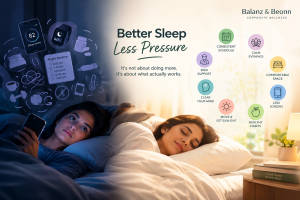
At some point in the past few years, sleep stopped being something people simply did and became something they were expected to optimise. Feeds are full of night-time routines with a dozen steps, trackers that grade last night’s rest with a score, gadgets, supplements and strict rules about exactly when to eat, drink and switch off the lights. A new word has arrived to describe all of it: sleepmaxxing.
The intention behind it is understandable. People are tired, and they want practical answers. But a quieter question has started to surface among professionals and workplaces alike: is all this effort improving sleep, or is it making it one more thing to worry about?
For anyone who cares about corporate wellness, the question matters. Sleep influences energy, mood, focus, decision-making and how people cope with stress. When employees are persistently under-rested, it shows up in the quality of the work and in how people feel about their days.
What is sleepmaxxing?
Sleepmaxxing is an informal term for the effort to get the best possible sleep through a long list of tweaks and tools. It can include:
- Detailed evening routines with many timed steps
- Wearable devices and apps that track sleep stages and produce nightly scores
- A wide range of supplements and sleep aids
- Specialised bedding, lighting, temperature controls and other gadgets
- Strict rules about food, caffeine, screens and exercise timing
- Newer trends that circulate online, some with limited evidence behind them
Not all of this is harmful, and some parts are genuinely useful. A cool, dark room and a consistent bedtime are sensible ideas. The concern arises when the pursuit of perfect sleep becomes stressful in itself.
The current reality: tired, busy and overloaded with advice
It helps to start with how people actually live. Many professionals manage long working hours, late meetings, family responsibilities, commutes and constant notifications. Hybrid work can blur the end of the workday, and screens are often the last thing people see before bed.
At the same time, awareness about sleep has grown, which is a good thing. People are more willing to talk about being tired and to look for ways to improve. But the volume of advice has grown too, and not all of it is equally reliable or relevant. Many people end up with a long list of things to try and no clear sense of which ones matter.
The hidden problem: when sleep becomes a performance
One of the most interesting side effects of the sleep optimisation trend is that trying hard to sleep can make sleep harder.
Tracking anxiety. A low score on a sleep app can create worry before the day has even started. Some sleep specialists have noted that preoccupation with tracker data can leave people feeling more anxious about their rest, not less. Wearables can provide helpful general patterns, but their nightly numbers are estimates and not a medical diagnosis.
Pressure to be perfect. When every night is graded, an ordinary restless night can feel like a failure. That pressure can make it harder to relax.
Routine overload. A long, rigid evening ritual is difficult to maintain, especially on busy or travel days. When the ritual breaks, people may feel that the whole plan has collapsed.
Over-reliance on products. Supplements and gadgets are sometimes treated as quick fixes, while the underlying habits stay unchanged. Some supplements may also interact with medicines or may not suit everyone, so it is wise to speak with a doctor or pharmacist before trying new ones.
Unproven trends. Some viral sleep hacks have limited or no solid evidence, and a few may carry risks for certain people. A healthcare professional is the right person to ask before trying anything unconventional.
None of this means that people should ignore sleep. It means that more effort is not always better effort.
What is actually worth your attention
Most sleep specialists and public health bodies tend to return to the same set of basics. They are not glamorous, but they are the habits with the broadest support. For most adults, general guidance suggests aiming for roughly seven to nine hours of sleep a night, although needs vary from person to person.
- A consistent schedule. Going to bed and waking up at similar times, including on weekends where possible, helps the body’s internal clock settle into a rhythm. This is probably the single most useful habit for many people.
- A wind-down period. Giving yourself thirty to sixty minutes of quieter activity before bed, such as reading, gentle stretching, a warm shower or calm music, signals to the body that the day is ending.
- A comfortable sleep environment. A room that is dark, quiet and reasonably cool, with a comfortable mattress and pillow, supports better rest. These adjustments do not need to be expensive.
- Mindful use of screens. Bright screens and stimulating content late at night can delay winding down. Reducing screen use before bed, or using features that dim the display, can help.
- Sensible timing of caffeine and meals. Caffeine late in the day can interfere with sleep for many people, and heavy meals close to bedtime may cause discomfort. Everyone responds differently, so it is worth noticing your own pattern.
- Daylight and movement. Spending time outdoors in daylight and staying physically active during the day are linked with better sleep for many people. A gentle evening walk can also help the body unwind.
- Managing worries. If racing thoughts keep you up, writing down tomorrow’s to-do list or concerns earlier in the evening can help clear the mind.
- Knowing when to seek help. If you regularly struggle to fall asleep, wake often, snore loudly, feel unrefreshed despite enough hours or feel very sleepy during the day, speak to a doctor. Persistent sleep problems can have treatable causes.
These habits may feel ordinary compared with high-tech solutions, yet they form the foundation on which everything else rests.
Sleepmaxxing vs. better sleep habits: a simple way to decide
When you come across a new sleep tip, a few questions can help you judge whether it is worth your attention:
- Is it supported by reliable evidence or by a reputable health source, not just a viral post?
- Is it realistic for your actual life, including busy and unpredictable days?
- Does it reduce stress or add to it?
- Is it safe for you, especially if you have a medical condition or take medication?
- Does it build a habit or depend on a product?
If the answer to most of these is yes, it is probably worth trying. If it adds complexity, pressure or cost without a clear benefit, it may be safe to skip.
How sleep shows up at work
Sleep is often treated as a purely personal matter, but workplaces shape it more than they realise. Late-night emails, back-to-back meetings, unrealistic deadlines and a culture of being always available can all eat into rest.
Employers can help in practical ways:
- Respect working hours, and avoid routine messages late at night unless truly necessary.
- Set reasonable expectations around response times, especially for hybrid and remote teams.
- Encourage regular breaks and movement during the day, which support better rest at night.
- Offer education sessions led by qualified professionals on sleep, stress and healthy routines.
- Create a culture where tiredness can be discussed openly, so employees feel comfortable asking for support.
- Lead by example, since people take cues from how managers manage their own time and rest.
A thoughtful corporate wellness company can bring these ideas together through expert-led sessions, practical resources and simple, flexible programmes designed for real working lives.
The Balanz & Beonn approach: a few things, done better
Wellness isn’t about doing everything differently. It’s about doing a few things better, consistently.
That is the central idea behind Balanz & Beonn, and it is especially useful for sleep. Most people do not need a seven-step, gadget-filled night. They need a few steady habits: a regular bedtime, a calmer last hour of the day and a comfortable room.
The promise is to help people make realistic, informed and sustainable choices that fit their existing lives and support their well-being over time. For sleep, that means clear guidance on what matters, honest reassurance that an occasional bad night is normal and small adjustments that can be repeated.
Through on-ground and virtual sessions and an easy-to-use app, Balanz & Beonn helps people and teams make realistic, informed adjustments to everyday life. For employees, that means practical support without pressure. For organisations, it means wellness that people can actually sustain.
A founder’s perspective
Speaking on why simple habits matter for sleep, Mr. Amit Kapoor, Founder, says:
“Good sleep is rarely about finding the perfect trick. It is usually about a few simple habits, practised steadily. When people stop chasing perfect nights and focus on small, realistic routines, they tend to feel better, and that shows up in how they work and live.”
It is a helpful reminder that consistency often does more than intensity.
Sleeping better, without the pressure
Sleepmaxxing reflects a real desire to feel rested, and parts of it can be useful. But for most people, the biggest gains still come from the basics: regular timing, a calm evening, a comfortable room and a workday that leaves space for rest.
The invitation is to simplify. Choose a few habits that suit your life, give them time and let go of the idea that every night must be perfect. If sleep problems persist, speak to a doctor. And for organisations, support employees with a healthy culture, practical resources and the right corporate wellness partner, so that good rest becomes a normal part of working life.


