
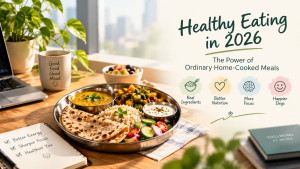
Scroll through any feed in 2026 and the message about food is loud. There are new superfoods, protein targets, eating windows, meal-prep systems, calorie trackers and a fresh “best diet” every few weeks. It is easy to come away feeling that eating well requires a degree in nutrition, a long grocery list and a lot of free time.
Meanwhile, in kitchens across the country, something much simpler continues quietly: a pot of dal on the stove, rotis puffing on the tawa, a seasonal sabzi, a bowl of curd and a plate of khichdi on a tired evening. These are ordinary meals. They rarely trend. And they may be among the most underrated tools for everyday wellbeing.
For anyone thinking about corporate wellness, this is a worthwhile question. Employees spend a large share of their waking hours at work, and what and how they eat during those hours shapes energy, mood and focus. So are we overlooking the value of the humble home-cooked meal?
The current reality of how we eat
It helps to be honest about modern working life. Many professionals have long commutes, packed calendars, hybrid schedules and little energy left by evening. Food delivery apps, packaged snacks and ready-to-eat options make life easier, and there is nothing wrong with using them. Convenience is a real need, not a failing.
But a few patterns have quietly grown alongside it:
- Meals eaten at the desk, often in a hurry and without much attention.
- Irregular meal times, with lunch pushed late and dinner pushed later.
- Heavy reliance on packaged or takeaway food during busy weeks.
- Confusion from conflicting advice, which makes people either overthink food or give up on it.
- The belief that healthy eating must be special, expensive or complicated.
That last belief is worth questioning. Good eating does not have to look like a wellness influencer’s plate.
Why ordinary home-cooked meals deserve more credit
A simple home-cooked meal carries several quiet advantages that no trend can easily replicate.
You know what goes into it. When you cook at home, you decide how much oil, salt, sugar and spice goes into the pan. That visibility is valuable, especially for people who are trying to manage their energy or follow medical advice.
It tends to be balanced by tradition. A typical Indian thali, with some grains, a pulse or legume, vegetables, curd and perhaps a salad or chutney, covers a wide range of food groups. Regional home kitchens have developed these combinations over generations.
It is familiar and satisfying. Food that feels comforting is easier to stick with. People rarely maintain eating plans they dislike, but they readily return to meals that feel like home.
It is flexible and affordable. Seasonal vegetables, staple grains and pulses are accessible to many households, and one pot can serve a family for more than one meal.
It supports slower eating. Sitting down to a plate of home-cooked food, even for fifteen minutes, naturally encourages a pause that desk snacking does not.
It carries social value. Shared meals with family or friends offer connection, conversation and a sense of belonging, all of which matter for mental wellbeing.
None of this means that every home-cooked meal is perfectly balanced, or that other food choices are bad. It simply means that the ordinary meal is a stronger foundation than we give it credit for.
Why we undervalue it
If home food is so useful, why does it so rarely feel exciting? A few reasons stand out.
It is not new. Wellness culture loves novelty, and a bowl of dal and rice is not new. Yet familiarity is often what makes a habit sustainable.
It takes effort and planning. Cooking requires time, energy and some organisation, all of which are scarce for busy professionals.
It lacks measurable “scores.” Apps and trackers are good at counting calories and macros, but less able to capture the value of a calm meal at a proper time.
It is overshadowed by extremes. Dramatic diets make headlines. Steady, ordinary eating does not.
The result is that many people treat home cooking as a chore to be outsourced, rather than as a resource worth protecting.
What the science broadly supports
Without going into complicated claims, the general guidance from nutrition professionals has been consistent for years. A varied diet built around vegetables, fruits, whole grains, pulses, nuts and adequate protein, with limited reliance on heavily processed foods and excess sugar and salt, supports long-term health. Regular meal times, adequate hydration and mindful eating also help many people.
Home-cooked meals make this kind of pattern easier to follow because they give people more control over ingredients and portions. Individual needs do vary, though. People with specific health conditions, allergies or dietary requirements should speak to a qualified doctor or registered dietitian rather than relying on general advice.
Practical ways to bring home-cooked meals back
The goal is not to cook elaborate meals every day. It is to make the ordinary meal easier to choose.
Start with two or three anchor meals. Choose a few simple dishes you enjoy and can prepare quickly, such as khichdi, dal with rice or roti, vegetable pulao or an egg or paneer bhurji with vegetables.
Cook once, eat twice. Preparing a slightly larger batch of dal, sabzi or a base gravy gives you a second meal with little extra work.
Prep small things ahead. Washing and chopping vegetables, soaking pulses or keeping a ready batter on hand can shorten weeknight cooking.
Keep a simple pantry. Staples such as rice, atta, dal, spices, seasonal vegetables, curd and nuts make improvised meals possible.
Pack your lunch when you can. Even two or three days a week of a home-packed meal can improve regularity and reduce reliance on takeaway.
Do not aim for perfect. Some days will involve a delivery order or a quick snack. That is completely fine. The pattern matters more than any single meal.
Eat without a screen when possible. A short, unhurried meal helps you notice hunger, fullness and enjoyment.
What employers can do
Workplaces have a meaningful role in how well employees eat, and small, thoughtful steps often matter more than large campaigns.
- Protect the lunch break, so employees have time to actually eat.
- Offer balanced, familiar food options in canteens or through meal partners, including simple home-style choices.
- Provide pantry facilities, such as refrigerators, microwaves and comfortable seating, to make packed lunches easy.
- Host nutrition sessions led by qualified professionals that focus on practical, everyday guidance rather than strict rules.
- Run light-hearted food initiatives, such as healthy recipe exchanges or a “favourite home-style lunch” day, which build community without pressure.
- Be inclusive of different dietary needs, including vegetarian, vegan, regional and religious preferences, so that everyone feels considered.
This is where a corporate wellness company can help. By combining expert-led sessions, simple challenges and practical resources, such a partner can turn good intentions into everyday support, without making food feel like another thing to get right.
The Balanz & Beonn approach: a few things, done better
Wellness isn’t about doing everything differently. It’s about doing a few things better, consistently.
That is the central idea behind Balanz & Beonn, and it fits food beautifully. Most people do not need a new diet. They need a few realistic adjustments to meals they already eat: a little more regularity, a little more variety, a little more attention.
The promise is to help people make realistic, informed and sustainable choices that fit their existing lives and support their well-being over time. In food terms, that might mean adding a vegetable to a familiar dish, packing lunch on two days a week or sitting down for a proper meal instead of eating at the desk.
Through on-ground and virtual sessions and an easy-to-use app, Balanz & Beonn helps people and teams make realistic, informed adjustments to everyday life. For employees, that means practical, judgement-free guidance. For organisations, it means wellness support that people can actually follow.
A founder’s perspective
Speaking on the role of everyday food in workplace wellbeing, Mr. Amit Kapoor, Founder, says:
“Good eating does not have to be complicated or expensive. Often, the most reliable wellness habit is already in our kitchens: a simple, balanced meal, eaten at a reasonable time. When workplaces make it easier for people to eat that way, energy, focus and mood all benefit.”
It is a useful reminder that wellbeing is often built from ordinary things done regularly.
Bringing the ordinary meal back to the centre
Healthy eating in 2026 does not need to be a project. It does not require a perfect plan, an expensive product or a complete change of habits. For many people, it begins with valuing what is already familiar: a warm, home-cooked meal, eaten without rushing, a few times a week.
The invitation is simple. Appreciate the everyday plate. Make it a little easier to prepare, a little more balanced and a little more regular. And for organisations, support employees with practical resources, thoughtful food environments and the right corporate wellness partner, so that good eating feels natural rather than demanding.


